Mastering in BlackHole Music App Free 2026
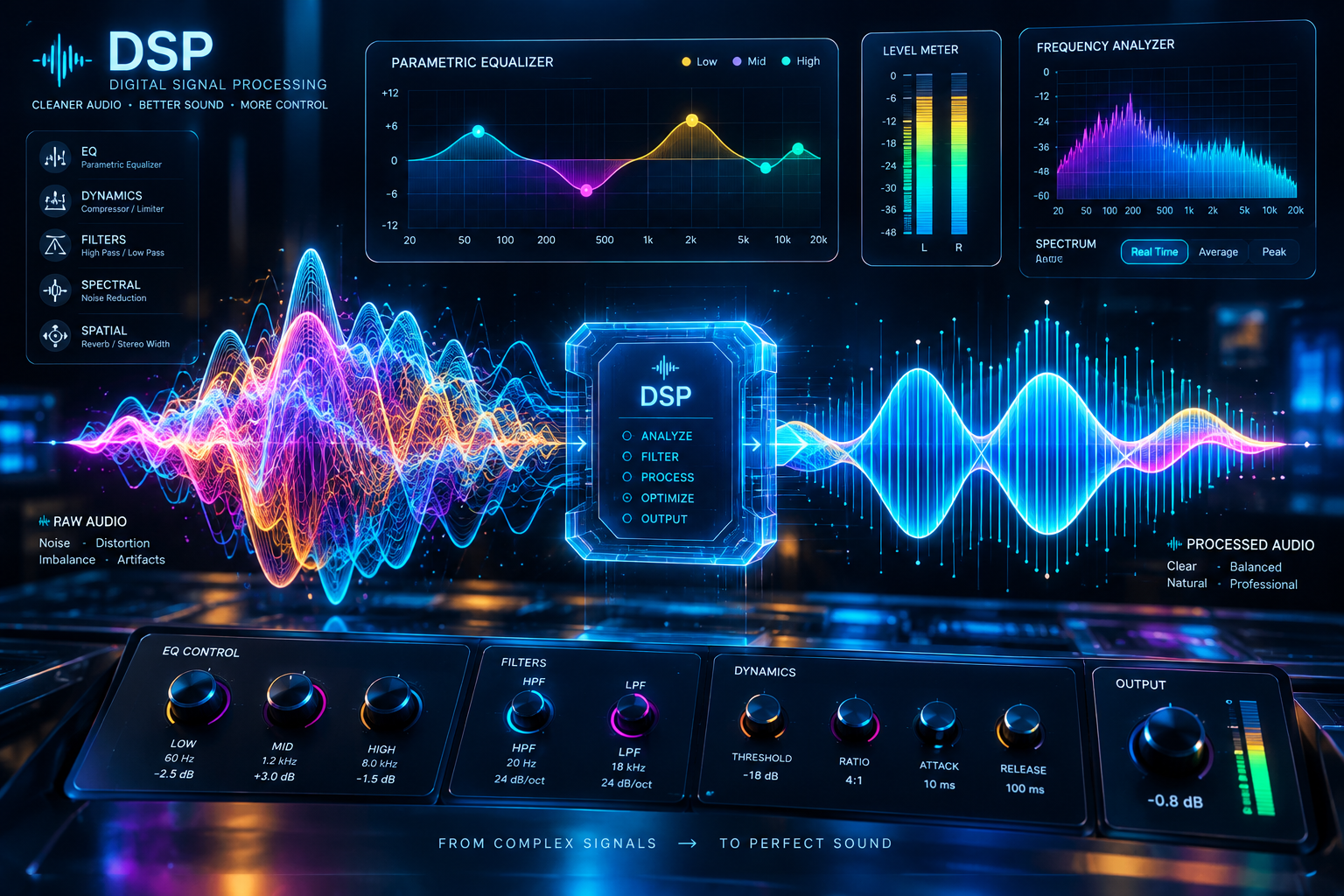
In addition to being able to stream audio and manage files offline in BlackHole Music App, the key factor in measuring the performance of an advanced audio app for mobile devices is its Digital Signal Processing (DSP) architecture.
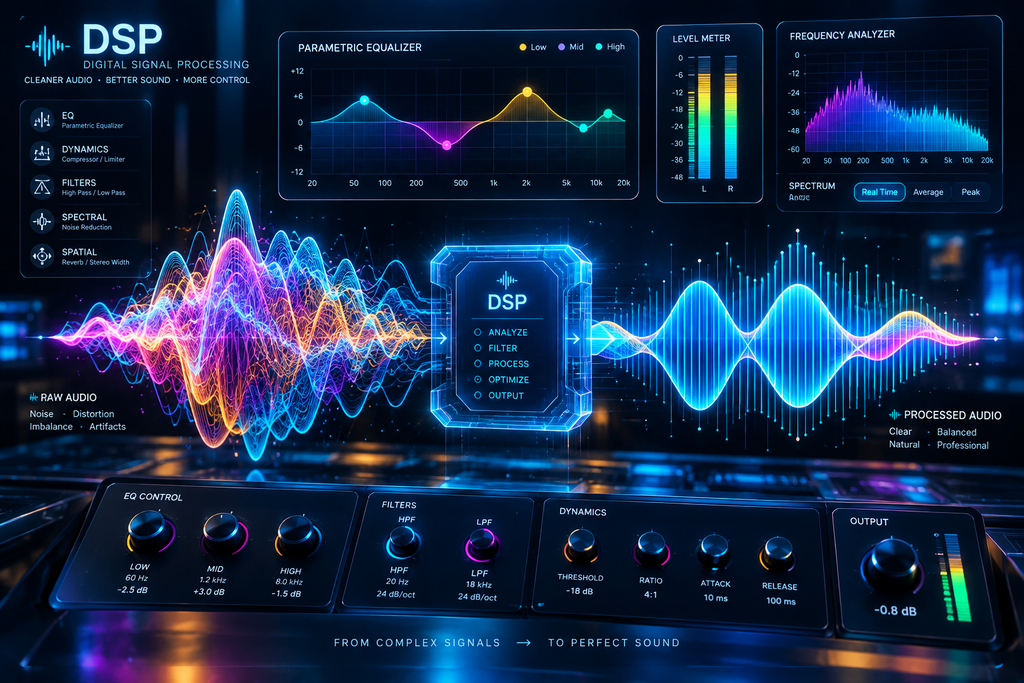
Making just the right adjustments to the sound data before it arrives at your drivers takes ordinary streaming to studio level! The ability to make use of custom DSP pipelines (especially in flexible media gamers such as BlackHole Music App) enables you to fix the frequency issues in hardware, normalize playback levels and achieve a spacious soundstage throughout your library.
Equalization Mechanics BlackHole Music App
Say goodbye to having to flick the volume buttons around and around on the hardware when switching between standard acoustic mastering and super compressed contemporary releases.
- Track Mode Normalization: Volume normalization of each song individually to a desired level (usually -14 LUFS to -18 LUFS). Perfect for random, randomizing playlists.
- Album Normalization: Maintains the intentional contrast between quiet intro tracks and loud climaxes, while keeping it consistent throughout an album.
- Peak Clipping Protection Safety Limiting: Dynamically reduces gain levels when calculated normalized output would exceed max digital boundaries.
Spatial Enhancement & Dynamic Transition Effects BlackHole Music App
- Gapless Engine: Keep live albums and classical suites continuous by pre-buffering the next audio frames so there are no gaps between them in the playback.
- Smart Crossfade: Fades out the end of tracks and smoothly ramps up the start of tracks using beat detection or user-defined time intervals.
- Crossfeed Virtualization Fatigue Reduction: Slightly delays the left ear playing a very small portion of the right (and vice versa). This replicates the sound of a true stereo loudspeaker, and helps minimize ear fatigue during prolonged periods of headphones.
Accessories & Direct Output Hardware BlackHole Music App
- Native Mixers: The native 44.1kHz CD-quality tracks are often resampled to 48kHz by the mobile operating systems. Direct drivers skip over system mixing layers altogether.
- Use of AAudio vs. Legacy OpenSL ES. Modern audio apps: AAudio pipelines are used for ultra-low latency signal processing in modern audio applications, which is not possible with legacy OpenSL ES frameworks.
- Bit-Perfect USB Passthrough Hi-Res Output: Supports 24-bit / 192kHz audio streams with no OS interference to external USB-OTG DACs.
| DSP Technology | Primary Function | Primary Benefit | Recommended Setup |
| Graphic EQ | Fixed band adjustments | Quick environment tweaks | Casual commuters & speakers |
| Parametric EQ | Precise frequency & $Q$ control | Headphone response correction | AutoEq profiles & audiophile gear |
| ReplayGain (EBU R128) | Perceptual volume leveling | Eliminates sudden volume jumps | Large shuffled playlists |
| Crossfeed | Subtle channel blending | Reduces extreme stereo ear fatigue | Long headphone sessions |
| Bit-Perfect Driver | Bypasses OS resampling | Preserves native track sample rate | External USB DAC setups |
Group Delay Correction BlackHole Music App
If sharp equalisation cuts or boosts are applied, common digital filters can change the timing relationship between various frequencies, resulting in small timing smears.
The difference between a Minimum-Phase and Linear-Phase Filter.
- Minimal Pre-Ringing Effect and Low Latency: These filters can be used for real-time playback, as they add minimal pre-ringing artifacts. They produce non-linear phase shifts over the audible range, however.
- Linear-Phase Filters: Maintain a constant time lag throughout the frequency range; that is, group delay must be kept uniform. This has the effect of eliminating phase smearing on complex audio passages but will cause the sounds to be slightly over-amped on volume transients, such as a snare drum hit
The effect of phase alignment in low frequencies.
- Linear Phase Response below 100Hz: If it’s linear phase response below 100Hz then the sub-bass will not sound “muddy” or off from the kick drum impact response.
Bit-Depth Conversion Engine & Dithering In BlackHole Music App
When an internal DSP engine is used to process the audio, such as in a volume attenuator or equalizer, high-precision math of 32 or 64 bits of floating-point is used to calculate values. This data can be quantized when output is reduced to 16-bit or 24-bit.
Quantization Noise Mitigation
- Truncation Errors: Cutting off extra bits directly is causing non-harmonic distortion which results in loss of low level detail, especially in the acoustic decay tails.
- Triangular Probability Density Function (TPDF) Dither: Applies a small, random level of dither noise before truncation, which makes the otherwise harsh quantization noise more benign, and closer to white analog noise.
Noise-Shaped Dithering
- Perceptual Masking: Advanced psychoacoustic dithering algorithms: Suppress added quantization noise out of sensitive human hearing bands (3kHz-5kHz) into high frequency bands (>15kHz) while maintaining dynamic range.
Dynamic Range Compression & Peak Limiting BlackHole Music App
Classical or film score recordings with high dynamic range tend to sound detailed in a silent room, but the most quiet parts of any recording are completely audible-ineffective in a noisy mobile recording environment.
A peak limiting device (Look-Ahead Processing)
- Look-Ahead Buffering: Pauses the audio signal for a few milliseconds to listen to the approaching peak transients, and instead of suddenly clipping the signal, slowly reduces the gain so that it will not clip the signal.
Multiband Compression
- Balance Controls: Controls the balance between the bass and treble. Permits the compression of really loud vocal peaks without producing unwanted bass “pumps.
- Night Mode & Outdoor Presets: Compromises overall dynamic range to allow for quiet night-time listening and for walkabouts outside where the volume will not be as loud.
High-Fidelity Resampling Algorithms BlackHole Music App
If you have the sample rate forced by the hardware or the DAC (such as taking a 44.1kHz CD track and pushing it to 96kHz or 192kHz), then the resampling algorithm employed by the DSP is the determining factor whether or not the spatial detail is preserved or lost.
Polyphase FIR Resampling
- Band-Limited Interpolation: Computes new samples with great accuracy, using the high-order Finite Impulse Response (FIR) filters, eliminating alias frequencies that “fold back” in the audible spectrum
Asynchronous Sample Rate Conversion (ASRC)
- Clock Jitter Elimination: Re-clocks input audio stream to match the output hardware master clock, eliminating timing jitter and phase instability due to unsynchronized digital clocks.


